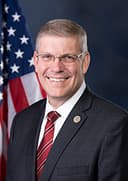
Barry Loudermilk
Representative · R-GA-11
OverviewMoney & Influence
7 former staff now lobby Loudermilk's office.
Former employees have moved to lobbying firms connected to this member's work.
$649K raised$690 avg donation77% from GA7 former staff → lobbyists
Key Findings
7 former staff now work as lobbyists
Multiple former employees have moved to lobbying firms, 4 with high-confidence matches.
36% of PAC money comes from industries this member's committee regulates
A significant share of funding comes from industries directly affected by this member's legislative authority.
48% of money comes from large donors (>$1,000)
A significant share of funding comes from major individual donors.
77% of donations come from GA
The majority of funding comes from within the member's home state.
How Does Money Flow Through Congress?
An interactive guide to the influence pipeline
Show ↓
How Does Money Flow Through Congress?
An interactive guide to the influence pipeline
How It Works
The Influence Pipeline
How money flows to — and through — Barry Loudermilk's office.
01
The Company
A corporation wants a law passed or blocked.
02
The PAC
Direct donations are illegal. So employees pool money into a Political Action Committee.
03
The Target
PACs fund members on committees that regulate their industry.
04
⚖️
The Committee
These committees write the laws that affect the donor's business.
07
🗳️
The Vote
Your representative votes — and the pattern is clear.
06
📋
The Lobbying
Those lobbyists push specific bills before their former colleagues.
05
🚪
The Revolving Door
Former staff become lobbyists for the same industries that fund their old boss.
The cycle repeats.
01
The Company
A corporation wants a law passed or blocked.
02
The PAC
Direct donations are illegal. So employees pool money into a Political Action Committee.
03
The Target
PACs fund members on committees that regulate their industry.
04
⚖️
The Committee
These committees write the laws that affect the donor's business.
05
🚪
The Revolving Door
Former staff become lobbyists for the same industries that fund their old boss.
06
📋
The Lobbying
Those lobbyists push specific bills before their former colleagues.
07
🗳️
The Vote
Your representative votes — and the pattern is clear.
The cycle repeats.
Follow the Money
Finance is the largest PAC sector at $739K from 370 PACs.
Industry PACs
$1.2MWhich sectors fund this member
Leadership PACs
$205KHow much power this member brokers
Top Individual Donors
$244KNamed people writing checks
GA · General Wholesale Beer Co · 2x
GA · Croy Engineering · 2x
GA · Homemaker · 2x
AR · 2x
GA · Yancey Brothers · 2x
NY · Capital One · 2x

Loudermilk
Financial Services
Votes Cast by Policy Area
Congress
902
Economics and Public Finance
649
Armed Forces and National Security
468
Government Operations and Politics
313
International Affairs
290
Finance and Financial Sector
204
The Revolving Door
William S. Anderson — field representative → The Business Roundtable, Inc.; The Business Roundtable, Inc.↗(20 filings)
Christopher C. Martin — district director → Southeast Missouri State University; Southeast Missouri State University↗(9 filings)
Deep Dive
How we built this & what it doesn't prove
- • Donor data from FEC filings (9.47M individual contributions)
- • Voting records from Congress.gov roll call data
- • Lobbying data from Senate LDA filings
- • Staff employment from House disbursement records
Correlation between donations and votes does not prove causation. Members may vote in alignment with donors because they share genuine policy beliefs, not because of financial influence. We present the connections — you decide what they mean.