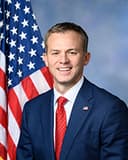
Blake D. Moore
Representative · R-UT-1
OverviewMoney & Influence
8 former staff now lobby Moore's office.
Former employees have moved to lobbying firms connected to this member's work.
$1.6M raised$1466 avg donation53% from UT8 former staff → lobbyists
Key Findings
8 former staff now work as lobbyists
Multiple former employees have moved to lobbying firms, 8 with high-confidence matches.
22% of PAC money comes from regulated industries
Some funding comes from industries within this member's committee jurisdiction.
73% of money comes from large donors (>$1,000)
A significant share of funding comes from major individual donors.
53% of donations come from UT
The majority of funding comes from within the member's home state.
How Does Money Flow Through Congress?
An interactive guide to the influence pipeline
Show ↓
How Does Money Flow Through Congress?
An interactive guide to the influence pipeline
How It Works
The Influence Pipeline
How money flows to — and through — Blake D. Moore's office.
01
The Company
A corporation wants a law passed or blocked.
02
The PAC
Direct donations are illegal. So employees pool money into a Political Action Committee.
03
The Target
PACs fund members on committees that regulate their industry.
04
⚖️
The Committee
These committees write the laws that affect the donor's business.
07
🗳️
The Vote
Your representative votes — and the pattern is clear.
06
📋
The Lobbying
Those lobbyists push specific bills before their former colleagues.
05
🚪
The Revolving Door
Former staff become lobbyists for the same industries that fund their old boss.
The cycle repeats.
01
The Company
A corporation wants a law passed or blocked.
02
The PAC
Direct donations are illegal. So employees pool money into a Political Action Committee.
03
The Target
PACs fund members on committees that regulate their industry.
04
⚖️
The Committee
These committees write the laws that affect the donor's business.
05
🚪
The Revolving Door
Former staff become lobbyists for the same industries that fund their old boss.
06
📋
The Lobbying
Those lobbyists push specific bills before their former colleagues.
07
🗳️
The Vote
Your representative votes — and the pattern is clear.
The cycle repeats.
Follow the Money
Finance is the largest PAC sector at $409K from 191 PACs.
Industry PACs
$1.1MWhich sectors fund this member
Leadership PACs
$534KHow much power this member brokers
Expect More Leadership Pac
Raised: $170KSpent: $211K
Expect More Leadership Pac
Raised: $364KSpent: $326K
Top Individual Donors
$1.6MNamed people writing checks
Boyer, H Roger↗$23K
UT · Boyer Company · 4xShumway, Randy↗$20K
UT · Cicero Group · 7xShaffer, Thayne↗$17K
UT · America First Credit Union · 5xLayton, David↗$15K
UT · President · 3xKenley, J.l↗$14K
UT · Kenley Ford · 4xMoore, Brent↗$12K
UT · Soltis Advisors · 2x
Moore
Ways and Means
Votes Cast by Policy Area
Congress
451
Economics and Public Finance
372
Armed Forces and National Security
280
International Affairs
193
Government Operations and Politics
184
Energy
141
The Revolving Door
Matthew E. Simmons — paid intern - house program → Mr. Matthew R. Simmons; Millennium Health; Scipher Medicine↗(28 filings)
Joseph P. Hill — paid intern - house program → The United States Pharmacopeial Convention; Cozen O'connor Public Strategies; The United States Pharmacopeial Convention↗(27 filings)
David S. Korn — paid intern - house program → Pharmaceutical Research And Manufacturers Of America; Pharmaceutical Research And Manufacturers Of America↗(25 filings)
Deep Dive
How we built this & what it doesn't prove
- • Donor data from FEC filings (9.47M individual contributions)
- • Voting records from Congress.gov roll call data
- • Lobbying data from Senate LDA filings
- • Staff employment from House disbursement records
Correlation between donations and votes does not prove causation. Members may vote in alignment with donors because they share genuine policy beliefs, not because of financial influence. We present the connections — you decide what they mean.